
Meet the Team
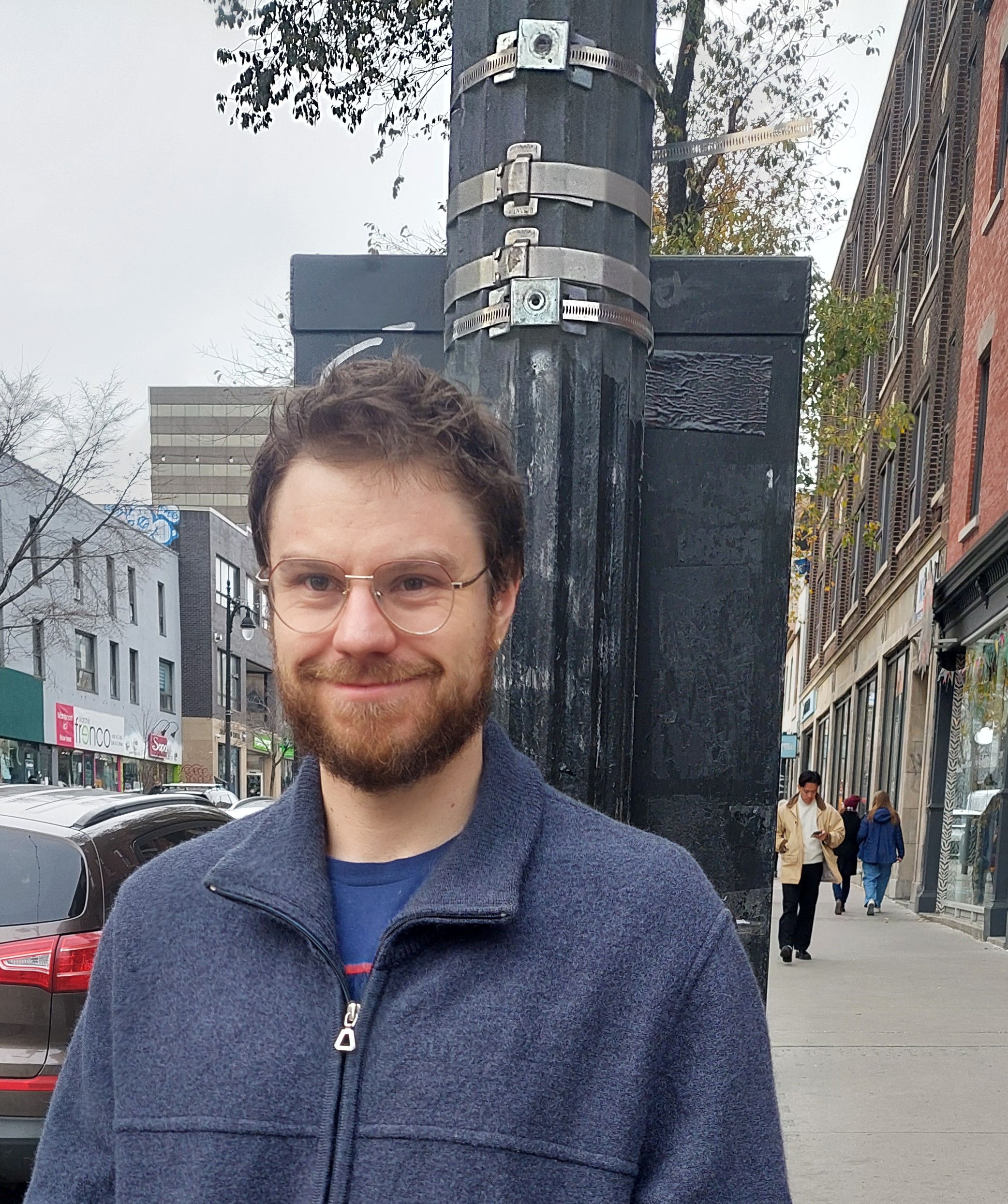
Willis Klein
Chief Executive Officer
Willis holds a Bachelor’s of Science in Psychology and Cognitive Science from the University of Toronto. He is currently a PhD candidate in the psychology department at McGill University, where he works under the supervision of Dr. Jennifer Bartz. His research interests include gaslighting in close relationships and the workplace, stability and change in personality traits, specifically adult attachment orientation, computational modelling of social-cognitive mechanisms, and social cognitive neuroscience broadly. His academic research is funded by Fonds de Recherche du Québec Société et Culture (FRQ SC). His work on gaslighting, conducted with Dr. Suzanne Wood, Dr. Jennifer Bartz, and Sherry Li, has attained national and international media attention.
Pythia is a natural extension of Willis’ interests in social psychology, personality, and cutting edge computational techniques, combined with his desire for his research to be widely applicable.

Louis-Philippe Robichaud
Chief Technology Officer
LP holds a Bachelor's degree in Mathematics and Computer Science from McGill University. He is currently a Master's student at École de Technologie Supérieure (Montréal), where he works under the supervision of Professor Claude Crépeau on problems at the intersection of cryptography and quantum computing. His research focuses on how games played by entangled parties can be used to build cryptographic protocols, supported by an NSERC scholarship.
A man of many interests, LP settled on mathematics and computer science because they felt like the most fundamental things one could study. His interest in understanding the limits of computation — what is computable, and what is not — led him naturally to cryptography, quantum computing, and information theory.
Outside of academia, he has spent the last few years building software as an independent consultant and Pythia CTO. He cares about building resilient and compliant structures that will hold up in the long run. He enjoys running, going to the gym, being outside, and above all, enjoying a cold brew in the sun.